Why Stopping Your Training In-Season is a Costly Mistake
Stopping your strength training in-season is one of the fastest ways to increase your risk of injury and lose your competitive edge.
Here’s what you need to know:
The Power Decay: Why You’re Getting Slower Every Week
Strength and power are "perishable" skills. Your nervous system is what tells your muscles to fire fast and hard. If you stop challenging that system with resistance, it begins to go dormant. Here’s a timeline of what happens without training.
2 Weeks Out: Your "Rate of Force Development" (how fast you can explode) begins to dip
4 Weeks Out: Your top-end speed and vertical jump height start to decay
8 Weeks Out: You are essentially playing at 80% of the capacity you had during the off-season.
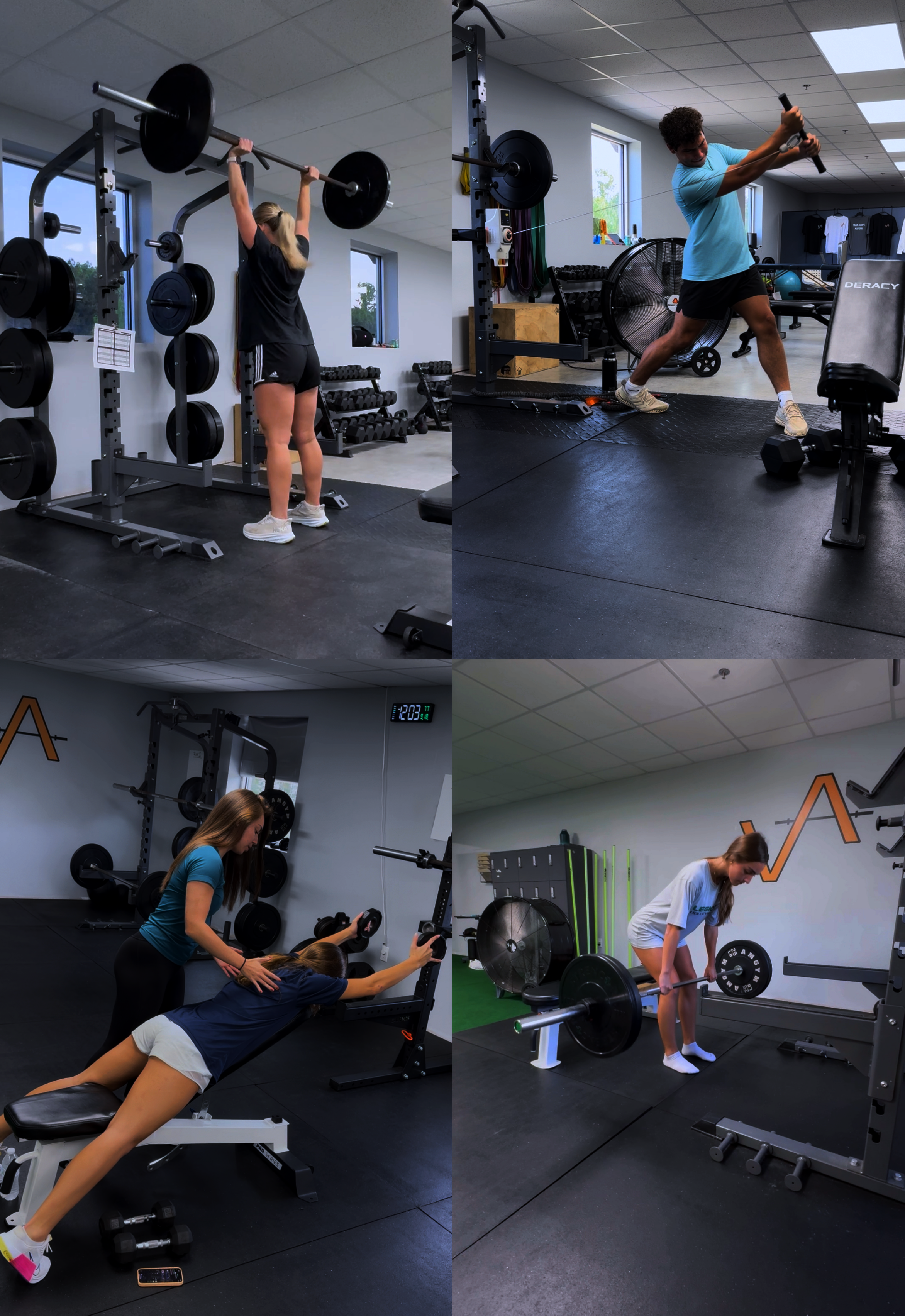
The Solution: The “Minimum Effective Dose”
Research shows that to maintain your strength and explosive power, you only need one high-quality session per week.
"Waking Up" the Nervous System
Our in-season sessions focus on high-intent movements. We want to move weights fast to keep your Central Nervous System (CNS) reactive. This ensures that when you need to sprint for a ball or jump for a header, your body knows how to recruit every muscle fiber instantly.
Performance Over Fatigue
We aren't here to make you sore. By dropping the total number of sets (volume) but keeping the weight challenging (intensity), we stimulate your muscles to stay strong without leaving you sore for your game the next day.
The Competitive Edge: Beating the "Late-Season" Fade
Most athletes are running on fumes by the end of the season. Their strength has evaporated, and their bodies are breaking down. The athlete who stays in the weight room once a week enters the post-season stronger, more explosive, and more confident than the person standing across from them.
Keep Your Edge This Season!
Our Athletic Performance 4x/month Membership was designed to help athletes continue consistently training while in-season.